Landlord Entry Rights in Commercial Leases: When Can They Come In and How to Protect Your Business Operations
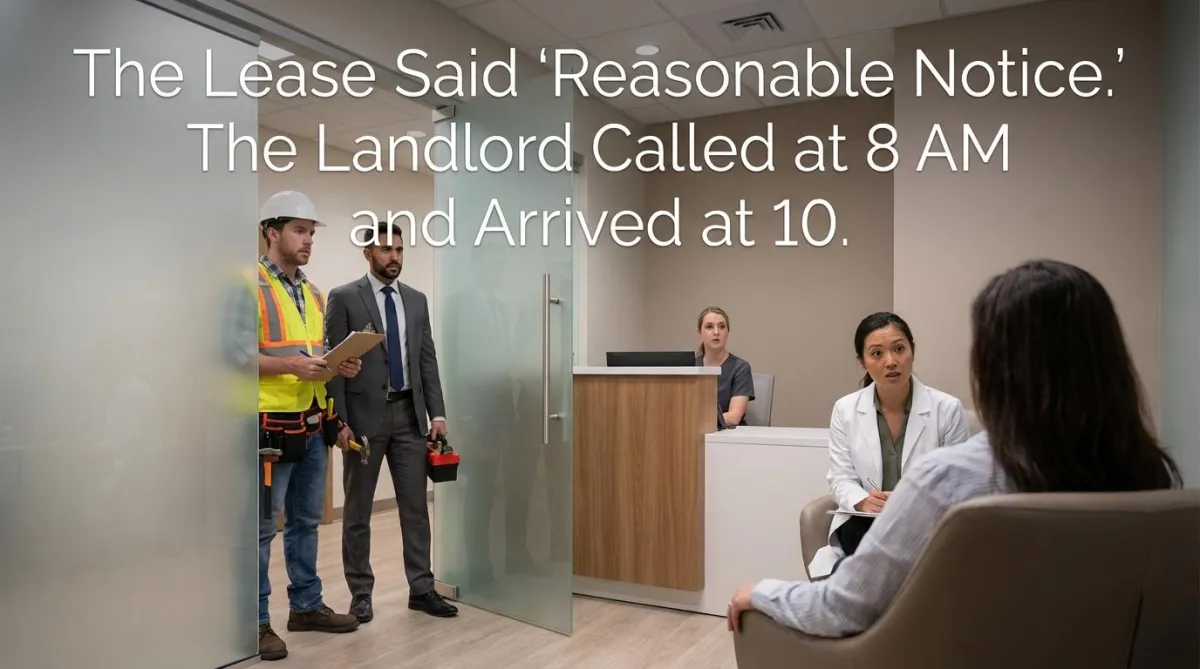
A medical practice had a landlord who exercised his right to enter the premises to inspect for repairs. The lease allowed entry ‘upon reasonable notice’ — which the landlord interpreted as a same-day phone call. The landlord and his contractor arrived during patient appointments, moved through an examination area, and created a situation that disrupted care and raised HIPAA concerns.
The lease didn’t define ‘reasonable notice,’ didn’t restrict the hours of entry, didn’t require advance scheduling with the tenant, and didn’t include any patient privacy or business disruption protections. The landlord was technically within his rights.
Landlord entry provisions in commercial leases define when and how the landlord can access the tenant’s space. For most businesses, this is a secondary concern. For medical practices, law firms, financial advisors, and any business that handles sensitive client information or provides services where unannounced entry is genuinely disruptive, the entry provision is a real operational risk.
If you want to know how your lease’s landlord entry provisions are structured, run it through sasir.ai — the first scan is free.
What Landlord Entry Provisions Typically Allow
Most commercial lease entry provisions permit the landlord to enter the tenant’s premises for defined purposes:
Inspection of the premises for condition, compliance, and repairs
Making repairs or improvements to the building or premises
Showing the space to prospective tenants or buyers (particularly during the final months of the lease term)
Emergency access (typically without notice)
The critical variables are the notice requirement and the scheduling constraints. Many landlord-drafted leases define notice as ‘reasonable’ without specifying what reasonable means in hours or days. Some define it in hours (24 hours notice is common). Others leave it entirely undefined.
What to Negotiate
Minimum advance notice: negotiate a specific number of business days (48 hours is common) of written advance notice before any non-emergency entry. Not ‘reasonable notice’ — a defined number.
Scheduling requirement: entry must be scheduled at a time mutually convenient to the tenant — not at the landlord’s unilateral election within the notice window.
Business hours restriction: non-emergency entry limited to defined business hours. No early morning, late evening, or weekend access without specific tenant consent.
Tenant representative requirement: the tenant has the right to have a representative present for all non-emergency landlord entry. This is particularly important for businesses handling client confidentiality.
Special provisions for sensitive businesses: medical practices, law firms, and financial advisors should negotiate specific HIPAA or client confidentiality protections into the entry provision — including escort requirements, restricted access to file areas and exam rooms, and documentation of access.
Emergency entry definition: define what constitutes an emergency (imminent structural risk, active flooding, fire) to prevent the emergency carve-out from being used for routine inspections.
The Bottom Line
Landlord entry provisions are operational protections that most tenants don’t focus on until they experience the disruption they were designed to prevent. Define the notice period, schedule requirements, and access restrictions specifically. For businesses handling sensitive client information, the entry provision is a patient privacy, attorney-client privilege, or financial confidentiality issue. Related articles:
Related articles:
Run your lease through sasir.ai. First scan is free.