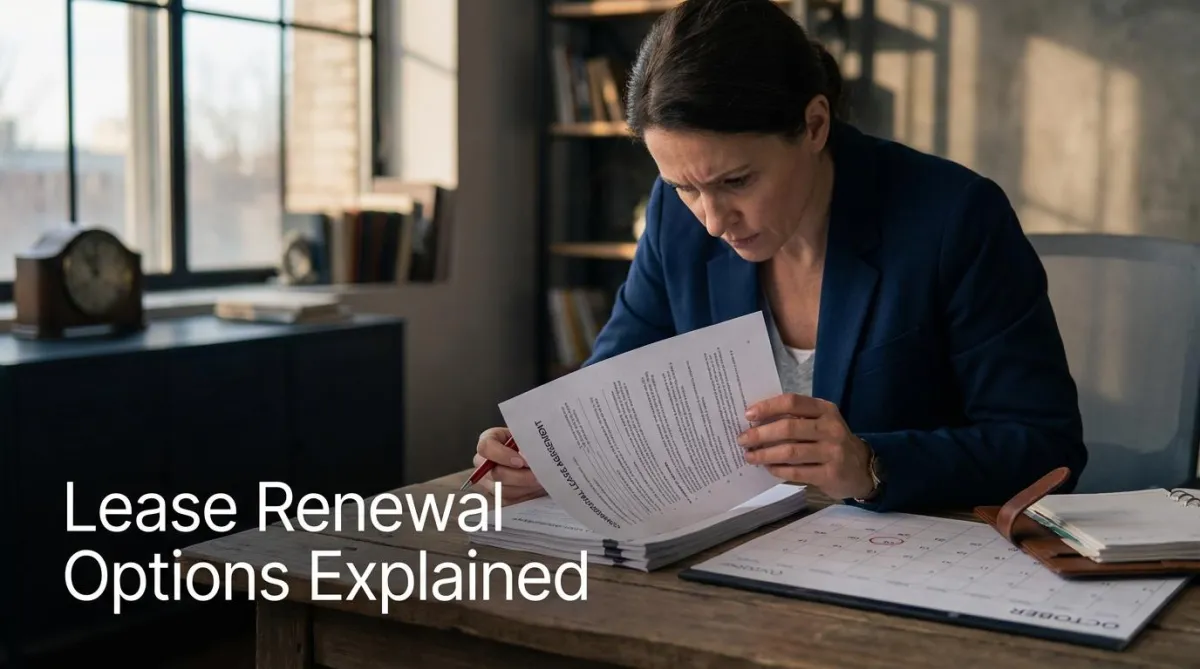
Lease Renewal Options: What They Are, What to Watch For, and How Missing the Deadline Can Cost You Your Space
The notice window was 180 days. The tenant sent notice on day 175.
The landlord rejected it — not because the tenant was late, but because the notice was sent to the wrong address. The lease required written notice to a specific address. The tenant had sent it to the general property management office.
The renewal option lapsed. The landlord re-leased the space to a new tenant at a significantly higher rate. The original tenant had 90 days to find a new location.
This isn’t an edge case. It’s one of the most common and most avoidable commercial lease disputes. And it starts with not understanding how renewal options actually work.
If you want to know whether your renewal option is properly structured — and whether you’re at risk of losing it — run your lease through Sasir.ai. The first scan is free. → https://sasir.ai
What Is a Lease Renewal Option?
A lease renewal option is a clause that gives you — the tenant — the contractual right to extend your lease for an additional term, at defined conditions, provided you exercise the option within a specified notice window.
The key word is right. Without a renewal option, there is no legal obligation for a landlord to offer you a lease extension. When your term ends, they can offer new terms, offer the space to another tenant, or simply let the lease expire.
A properly negotiated renewal option changes that dynamic entirely. It locks in your right to stay, limits the landlord’s ability to displace you, and gives you a defined framework for what the renewed lease will cost.
The problem is that most tenants don’t read their renewal clause carefully enough — and when they go to exercise it, they discover the mechanism is more complicated than they expected.
The Three Most Common Renewal Option Problems
1. Missing the notice deadline. Most commercial leases require renewal notice 90 to 180 days before lease expiration. Some require 12 months. The exact window varies by lease. Miss it by a single day — or send it to the wrong address, in the wrong format — and the option can lapse entirely, with no obligation on the landlord to accept a late exercise.
2. Undefined renewal rent. If the renewal clause says the new rent will be at ‘then-current market rate,’ without defining how market rate is determined, the landlord controls the number. There’s no process, no cap, and no recourse if their number is unreasonable.
3. Options that don’t survive assignment or sublease. If you’ve assigned your lease or subleased the space, your renewal option may have lapsed — even if the clause appears intact. Many renewal options are personal to the original tenant and are extinguished by any transfer.
A renewal option is only as valuable as the mechanism behind it. The right to renew means nothing if the notice requirements are a trap, the rent is undefined, or the option disappeared when you brought in a sublessee.
How Renewal Rent Is Typically Set
The three most common structures for renewal rent — and what each means for you:
Fixed renewal rent. The lease specifies the exact rent for the renewal term at signing. Maximum predictability. Negotiate this if you can — it eliminates uncertainty entirely.
Fixed percentage increase over current rent. The renewal rent is current rent plus a defined percentage (e.g., 5% or 10%). Predictable and calculable. Less favorable than a fixed number, but manageable.
Fair market rent (FMR). The renewal rent resets to prevailing market conditions at the time of renewal. If undefined, this hands pricing control to the landlord. The fix: define FMR explicitly in the lease as the average of two independent appraisals conducted within 30 days of the renewal notice. That one sentence converts ‘market’ from an opinion into a process.
If your renewal clause says ‘market rent’ without a defined determination process, add this: ‘Market rent shall be determined by the average of two independent appraisals, one commissioned by each party, within 30 days of exercise.’ That single sentence is one of the highest-value additions in any commercial lease negotiation.
What to Negotiate Before You Sign
Renewal options are negotiated at the time of the original lease — not when the lease is expiring. Here’s what to push for:
Multiple renewal terms. Don’t settle for one option. Negotiate two or three successive renewal periods if the space is important to your long-term operation.
Defined notice window with flexibility. The longer your required notice window, the more planning you need. Push for 90 days where possible. If 180 is required, calendar it immediately.
Defined notice mechanics. Notice requirements often specify certified mail to a named address. Ensure the address is current and correct at signing, and re-verify before you send renewal notice.
Defined rent for the renewal term. Fixed rate or capped percentage increase. Avoid undefined market rent if possible.
Survival through assignment and sublease. If your business model includes selling, assigning, or subleasing, make sure the renewal option explicitly survives those transfers.
No material default requirement. Some leases extinguish the renewal option if the tenant has been in default at any point during the term, even if the default was cured. Negotiate this out.
The Timing Warning Most Tenants Ignore
Your renewal leverage is highest when you’re not in a hurry. The landlord knows that a tenant who needs more time is a tenant who has fewer options.
The most common mistake: waiting until 6 months before expiration to start thinking about renewal. By then, the leverage window has narrowed, the landlord has had time to survey the market, and your negotiating position is weakened by urgency.
The right move: start the renewal conversation 12 to 18 months before expiration. Review your option clause 24 months out. Calendar the notice deadline the day you sign.
Timing creates leverage. Silence destroys it.
The Bottom Line
A lease renewal option is one of the most valuable protections in a commercial lease — when it’s properly structured, properly exercised, and protected against the common traps.
Know your notice window. Define the renewal rent. Protect the option through any transfers. And start the conversation long before you need it.
If you’re navigating a commercial lease, these additional resources may help:
CAM Charges Explained: What They Are, What’s Hiding Inside, and How Most Tenants Overpay
Triple Net Lease Explained: What NNN Really Costs and What Most Tenants Get Wrong
Tenant Improvement Allowance: What It Is, What’s Hidden, and How to Negotiate It
If you want to know whether your renewal option is properly structured and whether your notice deadline is calendared correctly, run your lease through Sasir.ai. The first scan is free. → https://sasir.ai