Estoppel Certificates in Commercial Leases: What You’re Signing, Why It Matters, and What to Check Before You SignPost
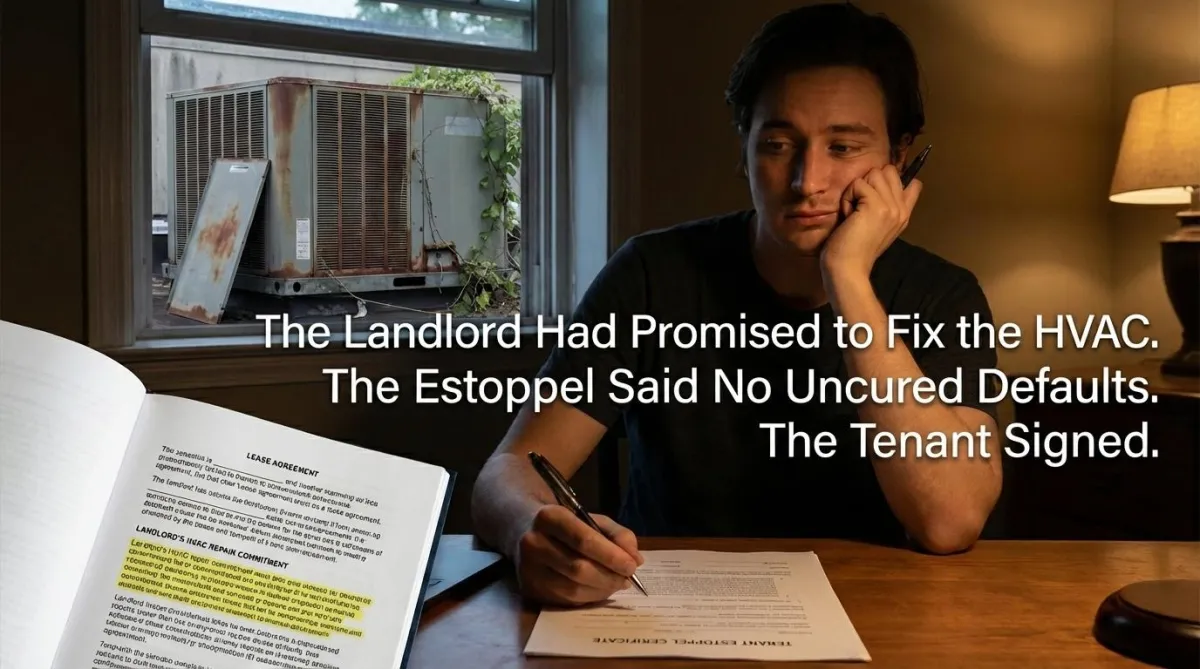
A retail tenant received a one-page estoppel certificate with a ten-day signing deadline. The landlord was refinancing the property. The tenant’s lease included a landlord commitment to repair the HVAC system by a specific date — a commitment the landlord had not honored. The estoppel certificate stated that the lease was in full force and effect, that there were no uncured landlord defaults, and that no modifications to the lease had been agreed upon.
The tenant signed without reading carefully. By certifying there were no uncured landlord defaults, the tenant waived their ability to assert the HVAC repair commitment. When they subsequently pursued the repair, the landlord pointed to the signed estoppel certificate. The tenant had effectively certified away a right they didn’t realize they were giving up.
Estoppel certificates are one of the most dangerous documents a commercial tenant signs — not because they are inherently harmful, but because tenants routinely sign them without understanding what they’re certifying and without checking whether the statements are accurate.
If you want to understand how your lease’s estoppel provisions work, run it through sasir.ai — the first scan is free.
What an Estoppel Certificate Is
An estoppel certificate is a signed statement by the tenant certifying the current status of the lease as of the date of signing. It typically certifies:
That the lease is in full force and effect
The current base rent and the date rent was last paid
The lease commencement and expiration dates
Whether there are any uncured landlord defaults
Whether any amendments or modifications to the lease have been agreed to
Whether the tenant has any claims, defenses, or rights of offset against the landlord
The certificate is typically requested when the landlord is selling the property, refinancing a mortgage, or seeking a new lender. The third party — buyer, lender, or refinancing bank — relies on the tenant’s certified statements as accurate representations of the lease status. Once signed, the tenant is generally bound by what they certified, even if the certification was inaccurate.
An estoppel certificate is not a routine administrative form. It is a binding certification that can waive claims and defenses the tenant didn’t realize they had. Every statement in the certificate should be verified against the actual lease before signing.
The Risk of Signing Without Review
The typical risks of signing an estoppel without careful review:
Certifying there are no uncured landlord defaults when the landlord has failed to make promised repairs, TI disbursements, or other commitments
Certifying no lease modifications when the parties have agreed verbally or by email to terms that weren’t formally documented
Certifying the lease is in full force and effect when there may be disputed termination rights or conditions that affect the lease’s validity
Certifying no rights of offset when the tenant has claims against the landlord that could reduce their rent obligation
What to Do Before Signing
Read the estoppel against the lease: every statement in the certificate should be verified against the actual lease document, including all amendments and written modifications
Document uncured landlord defaults: if there are any landlord obligations that have not been fulfilled, note them specifically in the estoppel rather than certifying no defaults exist
Identify oral or email modifications: if the parties have agreed to any lease terms verbally or informally, note those modifications in the estoppel to preserve them
Request adequate time to review: ten-day deadlines for estoppel certificates are common but aggressive. Negotiate a 20 to 30 day review window in the original lease.
Negotiate a reasonableness standard: the lease should provide that the tenant’s obligation to sign an estoppel is conditioned on the estoppel being reasonable in scope and not requiring the tenant to waive any claims or rights
The Bottom Line
Every estoppel certificate a commercial tenant signs is a binding statement about their lease. Inaccurate certifications can waive rights the tenant didn’t intend to give up. Read carefully. Note exceptions. Preserve uncured defaults. And negotiate the reasonableness standard and review period in the original lease.
Related articles:
Run your lease through sasir.ai. First scan is free.