Signage Rights in Commercial Leases: What the Lease Actually Allows and Why the Restrictions Matter More Than You Think
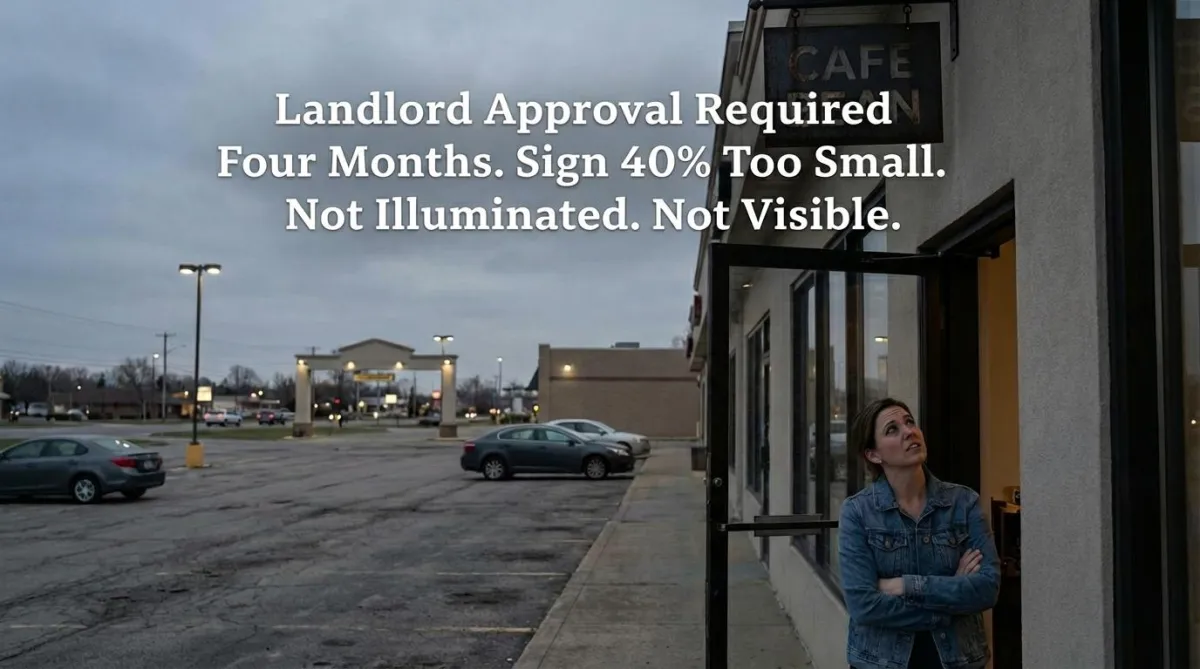
A national retail tenant signed a lease that required landlord approval for all exterior signage. The landlord’s approval process took four months and resulted in a sign 40% smaller than the brand’s standard, without illumination, in a position that wasn’t visible from the parking lot entrance.
The tenant’s brand recognition at the location suffered. Customers who knew the brand couldn’t find the entrance. Mystery shoppers rated the location’s exterior presentation as substandard. The lease had been signed with the landlord’s approval process intact and no pre-negotiated sign specification.
Signage rights in commercial leases range from pre-approved specifications to open-ended landlord discretion. For any business where the exterior sign is part of the brand, customer acquisition, or location visibility — retail, restaurant, fitness, medical, professional services — the signage provision deserves the same negotiation attention as the rent.
If you want to know how your lease’s signage provisions are structured, run it through sasir.ai — the first scan is free.
What Signage Provisions Typically Cover
A commercial lease signage provision typically addresses:
Exterior signage: what the tenant can place on the building facade, above the entrance, or on the building’s exterior walls. Landlord approval requirements, size limits, material restrictions, and illumination rules.
Pylon or monument signage: the right to have the tenant’s name on the center’s freestanding sign visible from the street. Often tiered by tenant size or type.
Window signage: what can be displayed in windows facing the exterior.
Interior directional signage: directory listings within the building.
Removal obligation: the requirement to remove all signage at lease expiration and restore the mounting surface to original condition.
What to Negotiate
Pre-approved sign specification: attach your brand’s signage specifications to the lease and negotiate pre-approval for signs meeting those specifications. This eliminates the post-signing approval process and prevents the landlord from requiring modifications that compromise brand standards.
Size and illumination pre-approval: specify minimum dimensions and illumination standards (backlit, halo-lit, or non-illuminated) in the lease itself, not subject to subsequent landlord discretion.
Pylon or monument listing: confirm your right to appear on the center’s freestanding street signage, at what tier, and at what cost (if any).
Response timeline for future signage approvals: if subsequent approval is required for updated or replacement signs, the landlord must respond within a defined window (typically 15 to 30 days) and approval is deemed granted if no response is received.
Restoration standard on removal: negotiate that the removal obligation extends only to the sign structure itself, not to marks or fastener holes which are normal wear.
The Bottom Line
Signage is how customers find you. A lease that gives the landlord unlimited discretion over your exterior sign is a lease that gives the landlord partial control over your customer acquisition. Negotiate pre-approved specifications, illumination standards, and a defined approval timeline before signing.
Related Stories:
Run your lease through sasir.ai. First scan is free.