Site Selection Risk in Franchise Leases: Why the Franchisor Approves the Site But the Franchisee Bears the Consequences
The franchisor sent a site approval letter. The demographics were right. The traffic counts met the brand’s criteria. The co-tenancy mix was strong at the time.
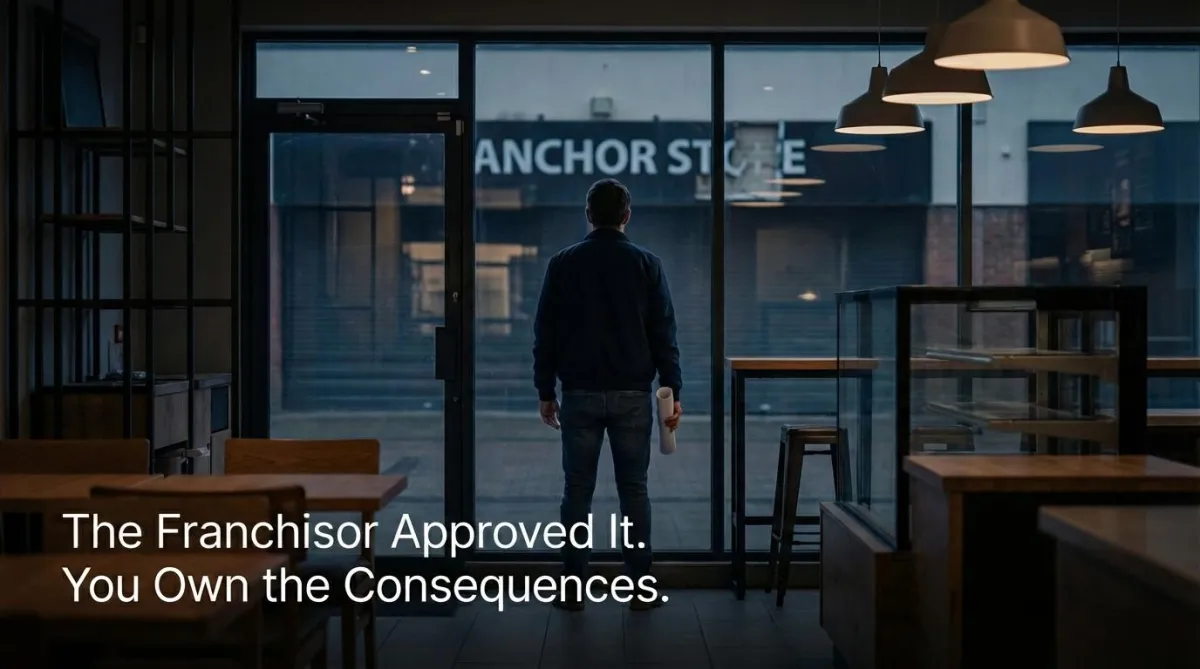
Eighteen months later, the anchor tenant went dark. Foot traffic dropped 40 percent. The franchise’s revenue fell below breakeven. The franchisee wanted out.
The lease had seven years remaining. The franchisor had approved the site. But the franchisor’s approval came with no guarantee of performance, no exit right if the location underperformed, and no financial responsibility if the site selection assumptions proved wrong.
The franchisee held a lease with a personal guarantee and nowhere to go.
Site selection in franchising is one of the most consequential decisions a franchisee makes — and one of the few where the party with the most information (the franchisor) bears the least financial risk. This post explains the site selection risk structure franchisees sign into, what the lease needs to protect against location risk, and how to read a site approval for what it actually is.
If you want to know how your franchise lease is structured to handle location risk, run it through sasir.ai — our AI-powered lease analysis tool. The first scan is free.
The Risk Transfer Problem
Franchisors have significant data advantages in site selection. They have system-wide performance data across hundreds or thousands of locations. They know which demographic profiles, traffic patterns, and co-tenancy configurations produce strong unit economics. Their real estate teams evaluate sites against a proven model.
Franchisees have almost none of this. They are evaluating a single site, often for the first time, against projections they can’t independently verify.
And yet: when the site selection proves wrong, the franchisee bears the consequences. The franchisor’s approval letter does not guarantee revenue. It does not guarantee performance. It does not obligate the franchisor to modify royalty obligations if the location underperforms. It is an approval to proceed — not a warranty of results.
The lease makes this asymmetry legally permanent. Once signed, the franchisee is bound to pay rent for the full term regardless of how the site performs. The personal guarantee extends that obligation to their personal assets. And most franchise leases contain no performance-based exit right that would allow a franchisee to leave a genuinely non-viable location without full lease liability.
The franchisor approves the site using system-wide data. The franchisee signs a 7–10 year lease and a personal guarantee. If the site underperforms, the franchisee pays. The franchisor collects reduced royalties on lower revenue — which is a different category of consequence.
What the Franchisor’s Site Approval Actually Means
A franchisor site approval is typically based on:
Demographic data: population density, household income, age distribution within a defined radius
Traffic counts: vehicle or pedestrian traffic past the location
Competition mapping: existing or authorized franchise locations within the territory
Co-tenancy analysis: the tenant mix in the center or surrounding area at the time of approval
Brand criteria compliance: does the site meet the brand’s minimum specifications for size, visibility, parking, and access
What site approval does not analyze or guarantee:
What happens to foot traffic if an anchor tenant leaves
Whether the specific operator (the franchisee) can execute at the revenue level the site ‘should’ produce
Whether the competitive landscape will change after signing
Whether the site’s performance will sustain the franchisee’s actual cost structure, including rent, royalties, and buildout debt service
The franchisor’s site approval answers one question: does this location meet brand criteria? It does not answer whether this location will work for this franchisee at these economics.
The Lease Provisions That Amplify Site Selection Risk
Most franchise leases are structured in ways that amplify rather than mitigate site selection risk:
Long terms with no performance exit. A seven to ten year lease term locks the franchisee into the site regardless of performance. There is no standard provision that allows early termination if the location generates less than a defined revenue threshold. The franchisee signed for the term, and the term is what they owe.
Personal guarantees tied to an underperforming location. When a site underperforms, the franchisee’s personal assets are guaranteeing rent on a space that may not produce enough revenue to cover operating costs. The guarantee doesn’t adjust for revenue shortfalls. It guarantees the lease.
No co-tenancy protection in the lease. If the center’s anchor tenant goes dark and drives a 40 percent traffic decline, many franchise leases have no co-tenancy clause that would reduce rent or provide an exit right. The franchisee pays full rent on a site that no longer has the customer traffic the site selection analysis assumed.
Restoration obligations that compound exit cost. If the franchisee does find a way to exit the lease, the restoration obligation — returning the space to original condition after a franchise-specific buildout — adds significant additional cost on top of whatever lease termination payment or liability they’re negotiating.
What to Negotiate to Protect Against Location Risk
Co-tenancy clause. If the center has an anchor tenant that drove the site selection decision, negotiate a co-tenancy clause: if the anchor goes dark for more than ninety days, rent reduces to a percentage of gross sales (typically 4–7%) until the anchor is replaced or the term ends. Include an exit right if the anchor has been dark for more than twelve months. This is standard negotiated protection in retail leases for exactly this scenario.
Revenue-based termination option (where achievable). In negotiated franchise leases, some franchisees have secured a limited termination right tied to performance: if gross sales fall below a defined threshold for two consecutive years, the franchisee has the right to terminate with a defined payment and notice period. This is not a standard provision — but it is achievable in some markets with strong tenant leverage.
Shorter initial term with renewal options. A five-year initial term with two five-year renewal options gives the franchisee a defined evaluation point. If the site is underperforming at year five, the franchisee can decline to renew rather than committing to a full ten-year term with no exit.
Limited guarantee with performance burn-off. Negotiate a guarantee that reduces after the location achieves consistent performance metrics, rather than a flat guarantee that remains unchanged regardless of how well or poorly the site performs.
Sublease and assignment rights that facilitate exit. If the location genuinely doesn’t work, the franchisee’s most realistic exit is subletting or assigning the lease to another operator. Ensure the assignment clause is not at the landlord’s sole discretion — negotiate ‘not unreasonably withheld’ with a clear process and timeline.
The Pre-Signing Site Diligence That Most Franchisees Skip
Before signing the lease on a franchisor-approved site, franchisees should conduct independent diligence beyond what the franchisor’s approval letter covers:
Validate the anchor tenant’s lease status: how many years remain on the anchor’s lease? Is it likely to renew? A center anchored by a tenant with two years left on their lease is a different risk profile than one with eight years remaining.
Research the landlord’s development history: are they an operating landlord who maintains occupancy, or a developer whose interests may not align with long-term center performance?
Talk to existing tenants in the center: what is their experience with the landlord and the center’s traffic patterns? Adjacent tenants will tell you things the landlord’s pitch materials won’t.
Model the unit economics at 70 and 80 percent of the franchisor’s projected revenue: if the location produces 30 percent less than projected, does the rent still work? If the answer is no, the lease needs a co-tenancy clause or a shorter term with renewal options.
Verify the competitive landscape independently: are there approved locations from the same franchise system nearby that the franchisor may not have fully disclosed? Is there a competing concept in the pipeline?
The Bottom Line
Franchisor site approval is not a guarantee of performance. It is permission to proceed. The financial consequences of a poor site selection — seven to ten years of rent, personal guarantee liability, buildout debt, and royalties on declining revenue — fall entirely on the franchisee.
The lease is where site selection risk gets locked in. A co-tenancy clause, a shorter initial term, a limited guarantee, and strong assignment rights don’t eliminate location risk. But they give the franchisee options if the site doesn’t perform as projected. Negotiate them before you sign.
Related resources for franchise tenants:
If you want to know how your franchise lease handles location risk, run it through sasir.ai. The first scan is free.